
 Equipment


 Music
Music






































The Doobie Brothers What Were Once Vices Are Now Habits


Full Details
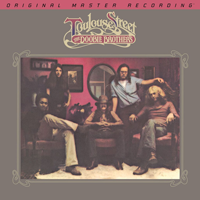
The Doobie Brothers Expand Their Palette on the Soulful What Were Once Vices Are Now Habits: Double-Platinum Album Features the No. 1 Hit “Black Water” and the Memphis Horns
Hear the Feel-Good 1974 Record in Reference-Grade Sound: Mobile Fidelity’s Numbered-Edition 180g 45RPM 2LP Set Plays with Striking Clarity, Dynamics, and Presence
1/4” / 15 IPS Dolby A analog master to DSD 256 to analog console to lathe
"And I ain't got no worries/'Cause I ain't in no hurry at all." The capstone to the chorus of the Doobie Brothers' No. 1 hit "Black Water" sums up the feel-good emotions and Southern-styled charm of What Were Once Vices Are Now Habits. As the group's most diverse and ambitious effort upon its release in 1974, the album finds the sextet expanding its stylistic parameters while holding firm on its signature blend of rock, country, and R&B. More than five decades later, it stands along with the band's other early and mid-70s records as an indispensable staple of a Hall of Fame career.
And now, it plays with reference-grade sonics. Sourced from the original analog master tapes, pressed at Fidelity Record Pressing in California, and housed in a Stoughton gatefold jacket, Mobile Fidelity’s numbered-edition 180g 45RPM 2LP of What Were Once Vices Are Now Habits affords the work the luxurious room of a 45RPM version for the first time. Because of the wider grooves, the music benefits from extraordinary soundstages, ultra-quiet backgrounds, big dynamics, and spot-on imaging. Everything sounds crisp and clear.
From the decision to run acoustic guitars through Leslie speakers on “Another Park, Another Sunday” to the naturalism of the shaded vocal harmonies that grace the memorable refrains to the famous a capella parts of “Black Water,” the brilliance of Ted Templeman’s production shines. Akin to Toulouse Street and The Captain and Me, nothing is overdone.
Aspects that make the songs welcoming and digestible — voices that naturally rise and fall, notes that carry and decay, bass lines you can follow from beginning to end, strategically placed percussive details, warm tones, well-defined separation between the players — come across on this collectible reissue with effortless presence, balance, and realism. As for the spaciousness? Listen to a few bars of the opening “Song to See You Through” and try not to shake your head in disbelief at what you hear.
Just as important as the sound, What Were Once Vices Are Now Habits pulls you in with one memorable tune after another. It’s a collective effort, with the material reflecting the strengths of each member and their special guests. At every turn, the record defies easy categorization yet sparks with amiable vibes built for cruising down the highway, hanging out on a lazy afternoon, and throwing a few cold ones back on a hot day.
Having reached #4 on the Billboard Album charts, spawned three singles, and sold more than two million copies, it's safe to say the public wanted a piece of what the Doobie Brothers were slinging. Besides, who could resist?
The band invited the Memphis Horns to inject brassy soul on three tracks. It secured Steely Dan virtuoso Jeff “Skunk” Baxter to supply pedal-steel guitar on “Tell Me What You Want (And I’ll Give You What You Need)” and recruited Arlo Guthrie to play autoharp on the same cut. The Doobie Brothers sat legendary New Orleans pianist James Booker at the 88s for “Down in the Track.” They tapped Little Feat co-founder Bill Payne to lay down organ on two songs and clavinet on another. The instrumental expansion extends to Novi Novog bowing the viola, Eddie Guzman tapping congas, and Milt Holland tackling tabla, vibraphone, marimba, and pandeiro.
The fruits of those labors, as well as the sharp songwriting of band anchors Tom Johnston and Patrick Simmons, resonate amid a record without a dull moment over its nearly 45-minute length. The Doobie Brothers’ loose boogies, swaggering strolls, country-leaning reflections, and let-your-hair-down romps buzz with magnetic riffs, swampy grooves, and seamless matrices of acoustic and electric guitar chords. They're in evidence on the back-and-forth grit of “Road Angel,” swagger of “Pursuit on 53rd St.,” rhythmic quick-step of “Eyes of Silver,” and prog devices of “Daughters of the Sea.”
To paraphrase the band on “Tell Me What You Want (And I’ll Give You What You Need)”: Easy, cool, and breezy. What a feeling, indeed.
Track Listing
Side One:
- Song to See You Through
- Spirit
- Pursuit on 53rd St.
Side Two:
- Black Water
- Eyes of Silver
- Road Angel
Side Three:
- You Just Can’t Stop It
- Tell Me What You Want (And I’ll Give You What You Need)
- Down in the Track
Side Four:
- Another Park, Another Sunday
- Daughters of the Sea
- Flying Cloud

